
Introduction
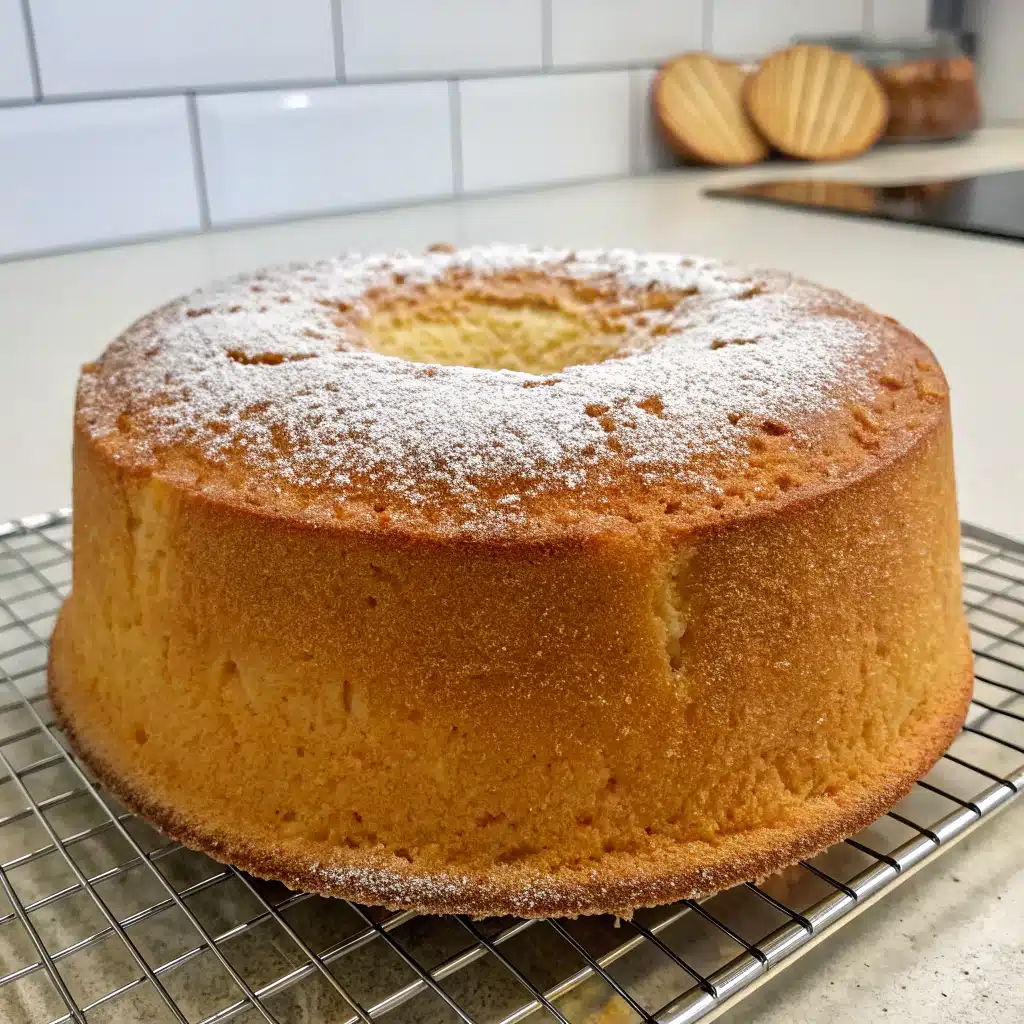
The classic Pound Cake is the epitome of simple elegance in baking. Originating in 18th-century England, its name derives from the original recipe’s revolutionary ratio: a pound each of butter, sugar, eggs, and flour. This simplicity yields a dense, moist, and wonderfully rich cake, making it the perfect canvas for everything from a simple dusting of powdered sugar to elaborate glazes and fresh fruit. Unlike lighter sponge cakes, the Pound Cake relies on the creaming method to incorporate air, resulting in its signature velvety texture and buttery flavor that defines comfort baking.
Ingredients
- Unsalted Butter, softened: 1 cup (225 grams)
- Granulated Sugar: 1 ½ cups (300 grams)
- Large Eggs, room temperature: 4
- All-Purpose Flour, sifted: 2 cups (240 grams)
- Baking Powder: 1 teaspoon (5 grams)
- Fine Sea Salt: ½ teaspoon (3 grams)
- Whole Milk or Heavy Cream, room temperature: ½ cup (120 ml)
- Pure Vanilla Extract: 1 teaspoon (5 ml)
Step-by-step Preparation
-
Preheat and Prep: Preheat your oven to 325°F (160°C). Grease and flour a standard 9×5-inch loaf pan or a 10-inch Bundt pan. For easier removal, line the pan with parchment paper, leaving an overhang on the long sides.
Tip: Lower baking temperatures are essential for pound cake to ensure the dense batter cooks evenly without burning the edges.
-
Cream the Fats and Sugar: In a large mixing bowl or stand mixer, beat the softened butter until creamy (about 1 minute). Gradually add the granulated sugar and beat on medium-high speed for 5 to 7 minutes until the mixture is light and fluffy. This step is crucial for incorporating air and achieving a good crumb.
Tip: Ensure the butter is truly soft (but not melted) to maximize air incorporation during creaming.
- Add Eggs and Flavoring: Add the eggs one at a time, beating well after each addition and scraping down the sides of the bowl. Stir in the vanilla extract. The mixture may look slightly curdled at this stage, but don’t worry.
- Combine Dry Ingredients: In a separate bowl, whisk together the sifted flour, baking powder, and salt.
-
Alternate Wet and Dry: With the mixer on low speed, begin adding the dry ingredients alternately with the milk/cream. Start and end with the flour mixture (e.g., 1/3 flour, 1/2 milk, 1/3 flour, 1/2 milk, 1/3 flour). Mix only until just combined. Overmixing will develop the gluten and result in a tough cake.
Tip: Stop mixing immediately once the last streaks of flour disappear.
- Bake: Pour the batter into the prepared pan and smooth the top. Bake for 60 to 80 minutes (loaf pan) or 70 to 90 minutes (Bundt pan). The cake is done when a wooden skewer inserted into the center comes out clean.
- Cooling: Let the cake cool in the pan for 10 to 15 minutes before carefully inverting it onto a wire rack to cool completely.
Nutritional Information
Pound cake is inherently calorie and fat-dense due to the high quantities of butter and sugar required for its classic texture. A standard serving (approximately 1/12th of the loaf) contains around 350-400 calories, 18-20g of fat, and 45g of carbohydrates. While it provides minimal vitamins, its primary benefit is providing a satisfying, rich dessert that is often made with simple, whole ingredients.
Storage
Store leftover pound cake tightly wrapped in plastic wrap at room temperature for up to 3 to 4 days. Avoid refrigerating the cake, as the cold temperature tends to dry out the crumb. For longer storage, pound cake freezes exceptionally well. Wrap the cooled cake (whole or sliced) tightly in plastic wrap, followed by a layer of aluminum foil, and freeze for up to 3 months. Thaw overnight at room temperature before serving.
Conclusion
This classic Pound Cake is perfect served simply with a dusting of powdered sugar. For an elevated dessert, pair slices with fresh summer berries, a dollop of whipped cream, or a bright lemon or orange zest glaze. For variations, consider swapping the vanilla extract for almond extract, or folding in 1 cup of miniature chocolate chips or toasted pecans before baking. Enjoy the satisfying simplicity of this timeless baking tradition!