
Introduction
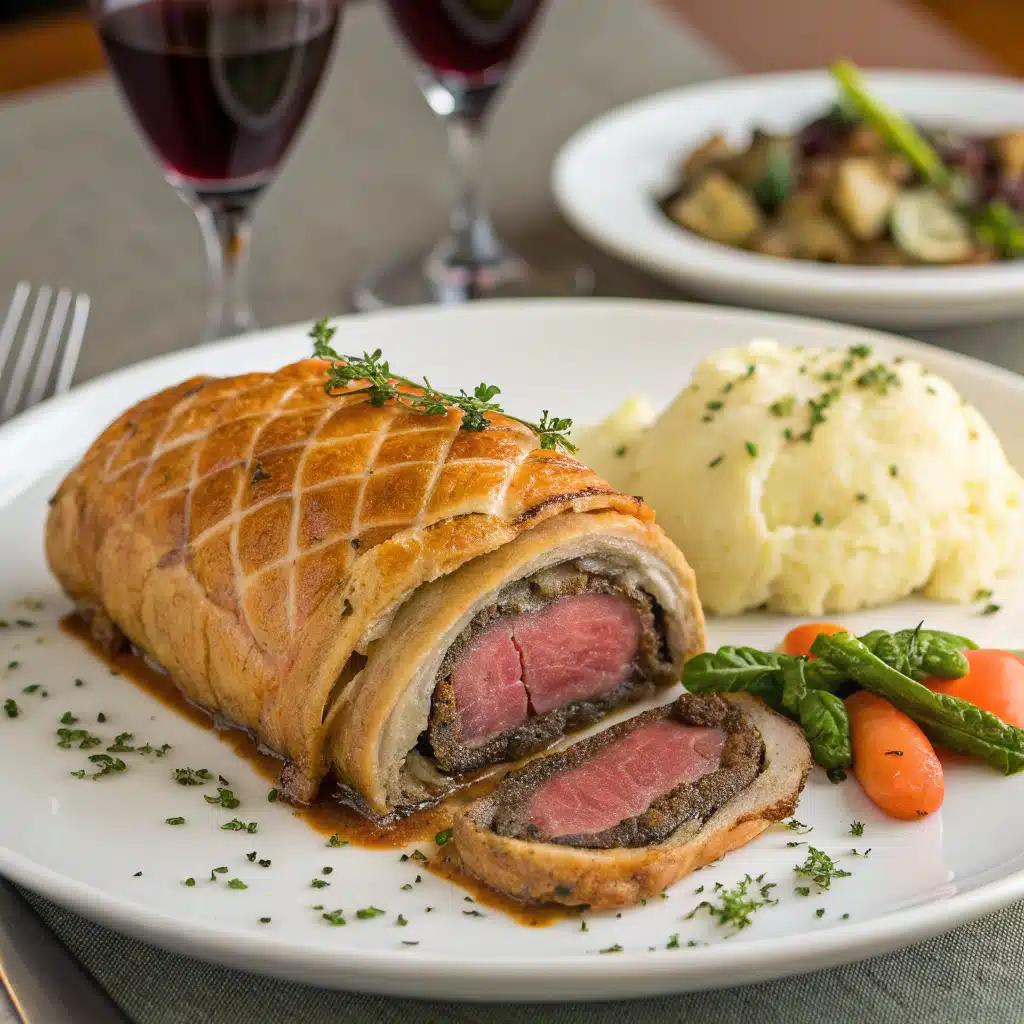
The Beef Wellington is the quintessential British culinary showstopper, a dish reserved for celebratory occasions and grand dinner parties. Named, perhaps, after the Duke of Wellington, this magnificent creation features a tender fillet of beef coated in a mushroom duxelles (a finely chopped mushroom mixture) and pâté, then tightly encased in flaky puff pastry and baked until golden brown. While it demands precision and patience, the reward is a culinary masterpiece—a perfect balance of rich, earthy flavors and succulent, medium-rare steak.
Ingredients
- 1 centre-cut Beef Fillet (tenderloin), about 900 g (2 lbs)
- 2 tbsp Olive Oil
- 2 tbsp Dijon Mustard
- 400 g (14 oz) Mixed Mushrooms (cremini, shiitake), finely chopped
- 2 Shallots, finely chopped
- 2 sprigs Fresh Thyme, leaves only
- 50 g (3.5 tbsp) Butter
- 12 slices Prosciutto or Parma Ham
- 500 g (1.1 lbs) Ready-made Puff Pastry (all-butter preferred)
- 1 large Egg Yolk, beaten with 1 tsp water (for egg wash)
- Salt and freshly ground Black Pepper, to taste
Step-by-step Preparation
-
Sear and Chill the Beef: Season the beef generously with salt and pepper. Heat the olive oil in a heavy skillet over high heat and sear the fillet for 30 seconds on all sides until browned. Immediately remove, brush generously with Dijon mustard, and set aside to cool completely.
Tip: Chilling the beef post-sear is crucial; it helps the steak maintain its shape during the final bake.
-
Prepare the Duxelles: Melt the butter in the same skillet. Add the finely chopped mushrooms, shallots, and thyme. Cook over medium heat for 10–15 minutes until all the moisture has evaporated and the mixture is dark and thick. Season well. Spread the duxelles onto a plate and chill completely.
Tip: The duxelles must be very dry; excess moisture will make the pastry soggy.
- Wrap the Fillet: Lay a large sheet of cling film (plastic wrap) on your counter. Overlap the slices of prosciutto to create a tight rectangle large enough to cover the beef. Spread the chilled duxelles evenly over the prosciutto. Place the cold beef fillet at the bottom edge. Using the cling film, tightly roll the prosciutto and duxelles around the beef, twisting the ends of the film to create a firm, compact log. Chill for at least 30 minutes.
- Encasing in Pastry: Roll the puff pastry into a rectangle large enough to fully wrap the beef log. Remove the beef from the cling film and place it onto the pastry. Brush the edges of the pastry with egg wash, fold the pastry over the beef, and trim any excess. Seal the edges tightly. Brush the entire surface with the remaining egg wash. Score the pastry lightly for decoration (avoid cutting through to the meat). Chill for 15 minutes.
-
Bake the Wellington: Preheat your oven to 200°C (400°F). Place the Wellington on a parchment-lined baking sheet. Bake for 30–35 minutes for medium-rare (internal temperature of 52–55°C / 125–130°F), or 40–45 minutes for medium.
Tip: If the pastry browns too quickly, cover it loosely with foil for the last 10 minutes.
- Rest and Serve: Let the Beef Wellington rest for a minimum of 10–15 minutes before slicing into thick portions. Resting allows the juices to redistribute, ensuring a tender slice.
Nutritional Information
Due to the richness of the pastry, butter, and prosciutto, Beef Wellington is a calorie-dense meal. A standard serving (approximately 1/6th of the fillet) contains an estimated 650–750 calories. It is, however, an excellent source of high-quality protein and iron from the beef, and B vitamins from the mushrooms. Enjoying this dish in moderation is key to maintaining a balanced diet.
Storage
Store leftover Beef Wellington tightly wrapped in the refrigerator for up to 3 days. To reheat, the oven is strongly recommended over the microwave to preserve the crispness of the pastry. Place slices on a baking sheet and reheat at 150°C (300°F) for 10–15 minutes until warmed through.
Conclusion
The Beef Wellington, with its golden lattice crust and perfectly pink interior, is truly a spectacular centerpiece. Serve it alongside a rich red wine reduction sauce (jus), creamy mashed potatoes, and blanched green vegetables like asparagus or green beans. For those who don’t eat red meat, this technique can be adapted for Salmon Wellington or even a vegetarian mushroom/beetroot version. Mastering this recipe is a culinary achievement that guarantees applause at any dinner table.